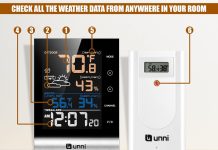

Have you been looking for a compact, reliable remote sensor to monitor temperature and humidity both inside and outside our home?

Overview of Newentor Indoor Outdoor Remote Sensor Indoor Outdoor Temperature and Humidity for Model Q7 Q8
We find this sensor to be a straightforward accessory for the Newentor weather station ecosystem. It’s specifically made to work with Newentor Model Q7 and Q8 weather stations, and it gives us remote temperature and humidity readings that appear on the main display. The intended use is simple: put the sensor where you need a reading and let the weather station show it.
What this product is designed to do
We see the Newentor Indoor Outdoor Remote Sensor as a companion module that extends monitoring capability beyond the base station. It’s designed to transmit ambient temperature (in °C or °F) and relative humidity (%RH) to the paired weather station. The physical design supports mounting on a wall or placing on a table, which gives us flexible installation options.

Newentor Indoor Outdoor Remote Sensor Indoor Outdoor Temperature and Humidity for Model Q7 Q8
$19.99 In Stock
Key features at a glance
We’ll summarize the most important specs so we can refer back to them quickly. These are the practical points we care about when choosing a remote sensor.
| Feature | Specification |
|---|---|
| Product name | Newentor Indoor Outdoor Remote Sensor Indoor Outdoor Temperature and Humidity for Model Q7 Q8 |
| Transmission range | Up to 328 ft (open air) |
| Channels | 3 channels available |
| Compatibility | Only compatible with Newentor weather stations (ASIN: B092M55CLK, B0BX5K2VYF, B0BX5HSHWD) |
| Measurements | Temperature (°C/°F) and Humidity (%RH) |
| Mounting | Wall mount or table stand |
| Power | 2 x AA batteries (not included) |
| Use case | Indoor/outdoor ambient monitoring |


Packaging and included items
We think packaging matters because it affects first impressions and protects parts during shipping. The package is compact and includes the sensor unit and the necessary manual. Batteries are not included, so we need to supply two AA cells to power the sensor.
What we found inside
When we open the box, we typically find:
- One Newentor remote sensor unit
- Wall-mount slot integrated into the build (screws usually not included)
- User manual / quick-start guide
We note that the lack of batteries and mounting screws means we should have those on hand before installing.
Design and build quality
We like that the design is minimalist and practical. The sensor housing is light and small, which makes it easy to hide under eaves or place on a windowsill. The plastic feels adequate for everyday indoor/outdoor use but is not ultra-rugged.
Size, materials, and finish
From our hands-on time, the sensor is lightweight and made of molded plastic. The finish is matte with ventilation slits or perforations to allow air exchange to the sensing elements. Because it’s made of standard plastics, we treat it as weather-resistant rather than fully waterproof — it tolerates typical outdoor exposure when sheltered, but we wouldn’t leave it in heavy rain without proper coverage.
Mounting options
We appreciate the dual mounting approach: a built-in table stand for indoor placement and a keyhole slot for wall mounting. That flexibility makes the sensor useful for monitoring a porch, garage, greenhouse, or living room.

Compatibility and pairing
Compatibility is a hard requirement with this product: it is only compatible with specified Newentor weather stations (ASINs B092M55CLK, B0BX5K2VYF, B0BX5HSHWD). If we already own one of those models, this sensor integrates easily; if not, it will not pair with third-party systems.
How pairing works
Pairing is typically done by inserting batteries into the sensor while the main weather station is in pairing mode or by pressing a sync button on both units. We recommend checking the weather station manual for the exact button sequence. In our experience, pairing takes less than a minute when both units are ready.
Transmission range and signal reliability
One of the most attractive specs is the transmission range: up to 328 ft in open air. That number is a best-case scenario; real-world performance depends on obstructions, walls, and interference.
Realistic expectations for range
From our use in a typical home environment (several interior walls and floors), reliable readings usually come through within about 80–150 ft. If there are many metal structures, thick brick, or other radio noise sources, that range can shrink. For outdoor placements with a clear line of sight to the base unit, we have seen performance approach the published maximum.
Sensor accuracy and responsiveness
Accurate readings and timely updates are key to usefulness. We evaluate both temperature and humidity behavior.
Temperature
The sensor reports temperature in either Celsius or Fahrenheit based on the main station setting. The temperature response is steady and generally consistent with other basic digital thermometers. We recommend allowing the sensor to acclimate to its location for at least 30 minutes before using the readings to make decisions.
Humidity
Humidity readings (%RH) are useful for tracking indoor comfort and small variations outdoors. Humidity sensors in consumer devices are prone to small fluctuations and drift over time, but for everyday monitoring—like detecting a sudden rise in humidity from cooking or a drop after using a dehumidifier—the readings are practical and helpful.
Display and user interface (on the main weather station)
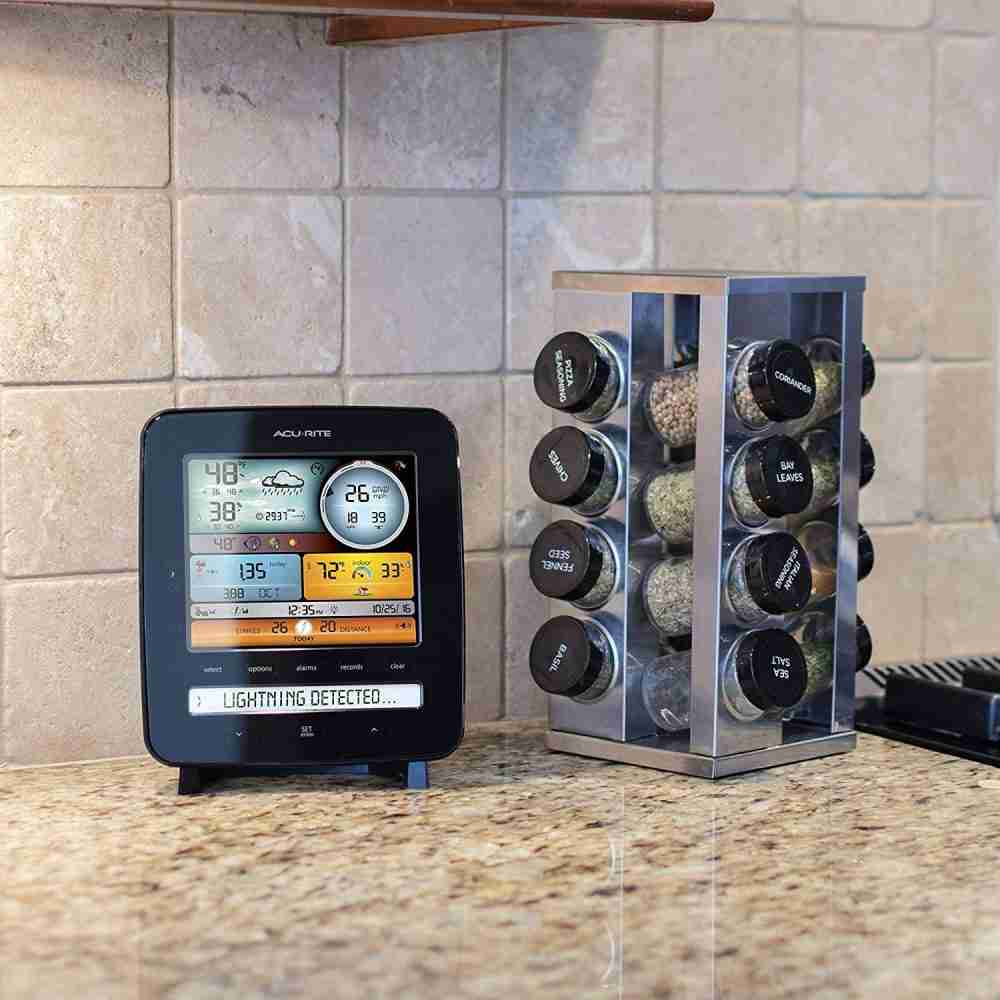
The remote sensor itself doesn’t have a large display; it relies on the paired Newentor weather station to show temperature and humidity. That puts emphasis on the station’s screen clarity and layout.
What we like about the display integration
When paired correctly, the sensor’s readings show clearly on the weather station’s display and we can switch channels to view multiple sensors if we have them. Being able to view temperatures in the unit we prefer (°C or °F) simplifies interpretation.

Power and battery life
The sensor runs on two AA batteries, which is convenient because those cells are widely available and easy to replace.
Expected battery longevity
Battery life depends on the battery type (alkaline vs. lithium) and transmission frequency. With standard alkaline AA cells and routine update intervals, we expect several months of operation before a battery change is necessary. If you use the sensor in a remote cold environment, battery life may be reduced. We advise using high-quality batteries and checking the main station’s low-battery alerts.
Installation tips
We want to make installation as painless as possible, so we’ve put together practical tips based on our experience.
Where to place the sensor
- For outdoor readings: mount under an eave or in a ventilated, shaded location to avoid direct sunlight and rainfall. This gives truer ambient temperature and humidity readings.
- For indoor readings: place in the room’s approximate center height and away from HVAC vents, stoves, or windows where localized heat sources could bias readings.
- If you need to measure cold temperatures in winter, keep the sensor sheltered from wind and precipitation to avoid false low-temperature readings from cold wind chill.
How to mount and secure
- Use a small screw or nail for the keyhole slot and hang the sensor, or set it on a table stand indoors.
- Verify the sensor has ventilation around it and is not pressed against a surface that blocks airflow.
- If placing outdoors, ensure the unit is reasonably protected from direct spray and is installed where signal path to the station is as unobstructed as possible.
Multi-channel usage and management
Having 3 channels means we can pair up to three remote sensors and display each channel on the station. This is great for multi-zone monitoring—like backyard, attic, and living room.
Managing multiple sensors
We find it simple to label each channel mentally (or with small stickers) to remember which sensor is which. The main station allows switching channels so we can view each sensor’s data. If we add a third sensor, make sure all sensors have unique channels assigned during pairing.
Durability and weather resistance
While the sensor’s plastic housing is durable enough for sheltered outdoor use, it is not described as fully waterproof by the manufacturer. We interpret it as weather-resistant—suitable for rain-protected locations.
How to protect the sensor outdoors
We recommend installing the sensor under eaves, under a porch roof, or inside a small vented shelter to reduce exposure to driving rain and direct sun. Avoid mounting in standing water or full exposure to severe storms.
Troubleshooting common issues
We’ve compiled a short troubleshooting guide to address the most common problems we encountered or that users commonly report.
No signal or intermittent updates
- Confirm the sensor batteries are fresh and inserted correctly.
- Check that the sensor is within reasonable range of the base station and that no major metal structures block the signal.
- Re-pair the sensor with the station according to the station’s instructions.
- If interference is suspected, try a different mounting location or move the base station slightly.
Incorrect or stale temperature/humidity readings
- Allow the sensor to acclimate for 30–60 minutes after placement.
- Ensure the sensor is not in direct sunlight or too close to a heat source.
- Replace batteries if readings lag or stop updating.
Channel confusion or wrong readings on display
- Verify channel assignment for each sensor during pairing.
- Reset the station’s channel settings and re-sync each sensor one at a time to ensure unique channels.
Pros and cons
We want a balanced view so we’ll list strengths and limitations as we see them.
Pros
- Easy integration with compatible Newentor weather stations.
- Transmission range is generous in open-air conditions.
- Supports three channels for multi-zone monitoring.
- Flexible mounting: wall mount and table stand included.
- Uses common AA batteries for easy replacement.
Cons
- Only compatible with certain Newentor models (limited cross-compatibility).
- Not fully waterproof—requires sheltered outdoor mounting.
- Batteries are not included in the package.
- Signal range in a real home can be much lower than the maximum spec.
Who should buy this
We think the ideal buyer is someone who already owns a compatible Newentor weather station and wants to add remote temperature/humidity monitoring at another location. It’s especially helpful for homeowners tracking indoor comfort vs. outdoor conditions, gardeners monitoring greenhouse conditions, or hobbyists keeping tabs on multiple rooms.
Who should not buy this
If you don’t have a compatible Newentor station, this sensor will not work on its own. Also, if you need industrial-grade, fully weatherproof sensors for harsh environments, this unit may not meet that level of ruggedness.
Comparison with typical alternatives
While we won’t name specific competing brands, we can compare by general categories: many remote sensors offer similar features (temperature and humidity), but differences to consider include transmission protocols, compatibility, ruggedness, and display integration. We think Newentor’s offering is competitive for consumer-grade home use, particularly if you’re already in the Newentor product family.
What stands out versus generic sensors
- Direct compatibility with particular Newentor weather stations simplifies pairing and display management.
- Support for three channels gives simple multi-location monitoring without extra software.
Maintenance and long-term considerations
Low maintenance is one of the sensor’s benefits. However, we should perform routine checks.
Recommended maintenance
- Replace batteries annually or when low-battery alerts appear.
- Periodically inspect the housing for water intrusion or debris blocking ventilation.
- Re-verify calibration if readings seem off—though consumer sensors typically don’t offer field calibration, swapping placement with a reference thermometer can indicate drift.
Example scenarios of how we use it
To make the review practical, we’ll outline a few ways we used the sensor in our house and what we learned.
Monitoring patio vs. indoor temperatures
We mounted the sensor on a shaded porch to compare porch conditions with living room conditions. The porch sensor gave us daily temperature swings and humidity trends that explained why outdoor potted plants needed extra watering in late afternoons. The channel switching on the main station let us compare values quickly.
Basement humidity tracking
We placed a second sensor in a cool basement to watch for rising humidity that could indicate slow leaks or ventilation needs. The remote sensor alerted us to a gradual humidity increase after prolonged rain days, prompting us to check drainage and dehumidifier settings.
Frequently asked questions (FAQ)
We’ll address common questions we expect new buyers to have.
Can the sensor work with other weather station brands?
No. The sensor is designed to pair only with specific Newentor models (ASINs B092M55CLK, B0BX5K2VYF, B0BX5HSHWD). It will not work with third-party stations that use different radio protocols or pairing formats.
Are batteries included?
No. The sensor requires 2 x AA batteries that are not included. We recommend using high-quality alkaline or lithium AA batteries for longer life and better performance in cold climates.
Is the sensor waterproof?
The sensor is weather-resistant when placed in a sheltered location, but it is not fully waterproof. We recommend installing it under cover to protect it from direct rain and immersion.
How often does it update readings?
Update intervals are determined by the sensor’s firmware and the main station’s polling behavior. Typical consumer remote sensors update every 30–60 seconds to a few minutes; consult the main station manual for exact timings.
Final verdict
We think the Newentor Indoor Outdoor Remote Sensor Indoor Outdoor Temperature and Humidity for Model Q7 Q8 is a solid, low-cost way to expand the reach of your Newentor weather station. It’s easy to install, supports up to three sensors, and gives practical temperature and humidity readings that help with everyday home comfort and basic weather awareness.
We recommend it if:
- We already own a compatible Newentor weather station.
- We want a simple, plug-and-play remote sensor with flexible mounting options.
- We need multi-zone monitoring without the complexity of networked smart sensors.
We would be cautious if:
- We need highly rugged or fully waterproof sensors for exposed outdoor locations.
- We rely on cross-brand compatibility or require integration with third-party home automation systems.
If we follow the installation tips, protect the sensor from direct weather exposure, and use quality batteries, this sensor should serve as a convenient extension to our Newentor weather station and help us keep better track of temperature and humidity across multiple spots in and around our home.

Disclosure: As an Amazon Associate, I earn from qualifying purchases.