
?Have we found a reliable indoor-outdoor weather station that balances clarity, features, and everyday usability?

Our first impressions of the Wittime 2081 Weather Station Indoor Outdoor Thermometer Wireless Temperature Humidity Monitor with HD Color Display and Outdoor Sensor
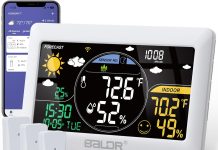
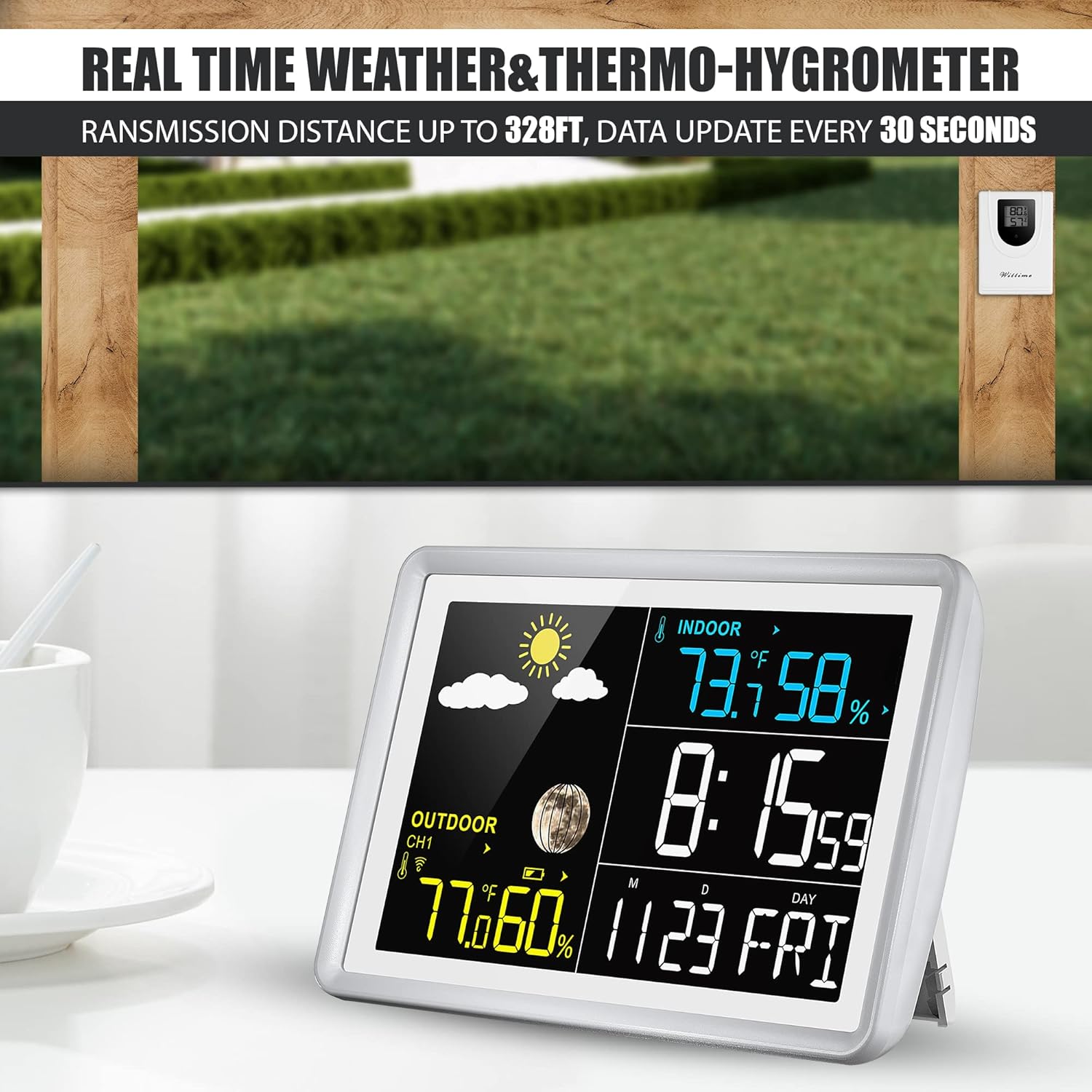
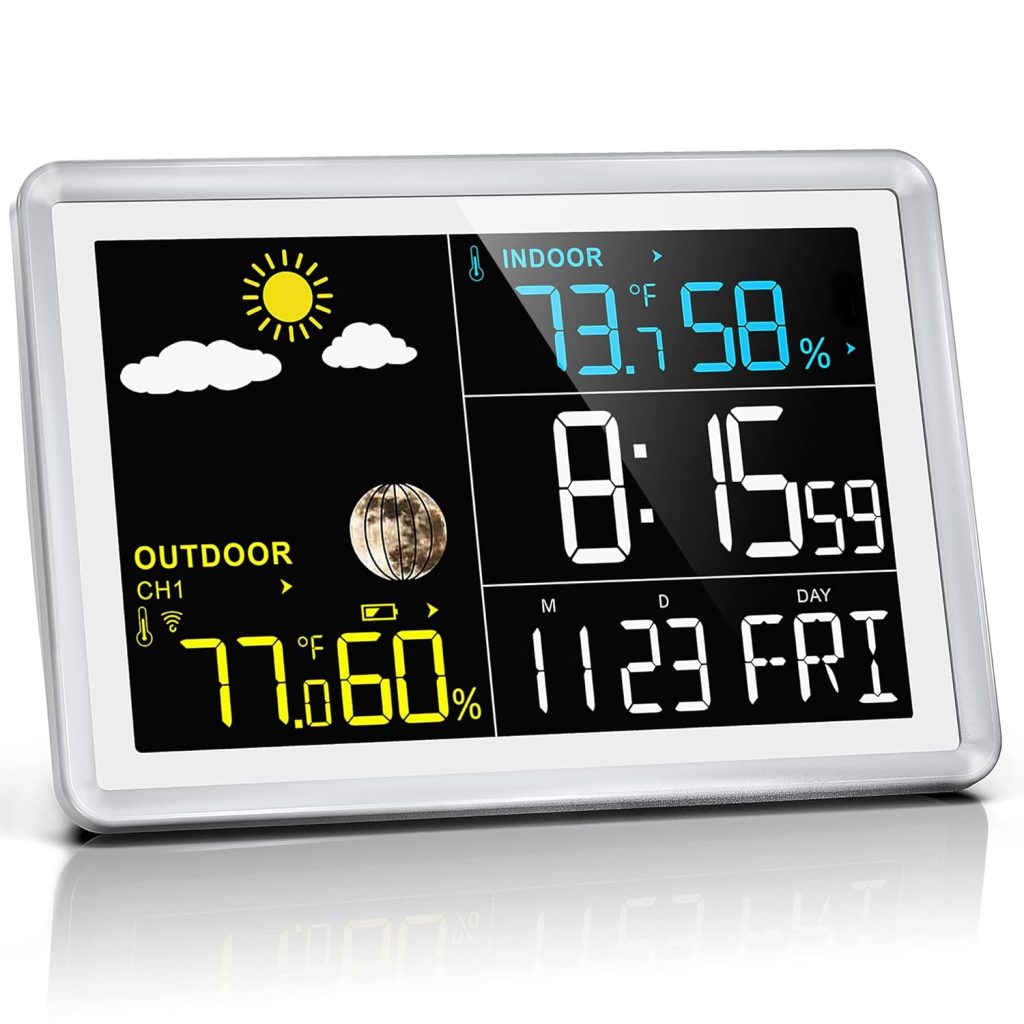
We were immediately taken with the bright, HD color display and the overall modern look. The unit feels solid enough to live on a desk or a wall, and the screen’s comfortable color combinations make reading temperature and humidity at a glance much easier than many monochrome or cramped displays.
The product name is long, but it accurately reflects what we get: an indoor-outdoor thermometer with humidity measurement, wireless outdoor sensor, color display, and a built-in pressure sensor. Our first impression set the tone for how we tested it: visually, functionally, and for daily convenience.
What’s in the box and immediate setup experience
We found the package includes the indoor display unit, one wireless outdoor sensor, a power adapter for the display (not always standard with all weather stations), and batteries intended as a backup to preserve data during a power loss. Unboxing was straightforward, and setup required minimal steps.
The sensor paired quickly and the display auto-populated data after a short sync period. We appreciated that the display can run off an external power source so the screen can stay on constantly, which is particularly handy for continuous monitoring.

Wittime 2081 Weather Station Indoor Outdoor Thermometer Wireless Temperature Humidity Monitor with HD Color Display and Outdoor Sensor
Design, build quality, and display
We like well-thought-out design when a device looks good and feels reliable, and this unit mostly delivers on both counts. The Wittime 2081 strikes a balance between a compact footprint and a large, readable screen.
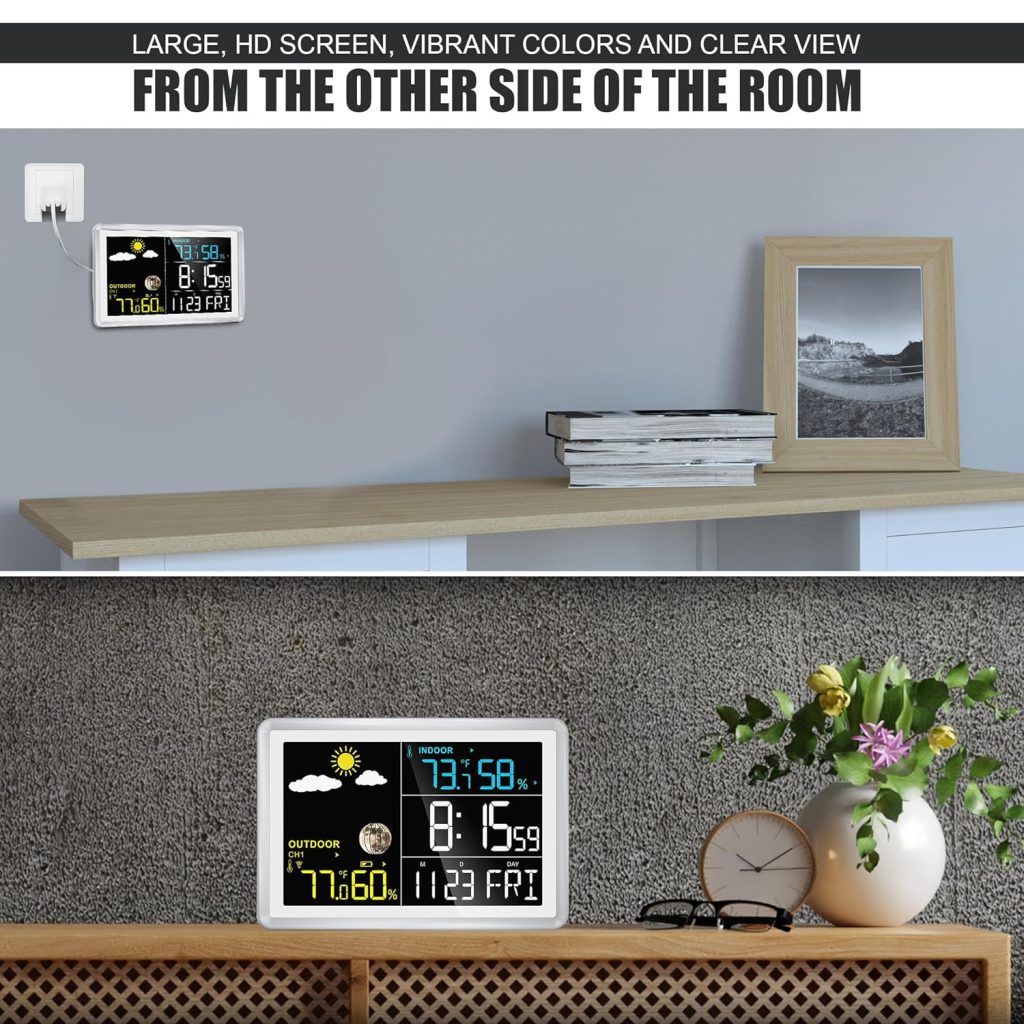
The HD color display is a major selling point. The contrast and viewing angles are much better than typical base-model weather stations. The case is plastic but feels sturdy enough for daily use. We noticed the screen is easier on the eyes because of pleasant color choices that separate temperature, humidity, and other icons clearly.
Display brightness and power options
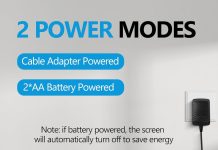
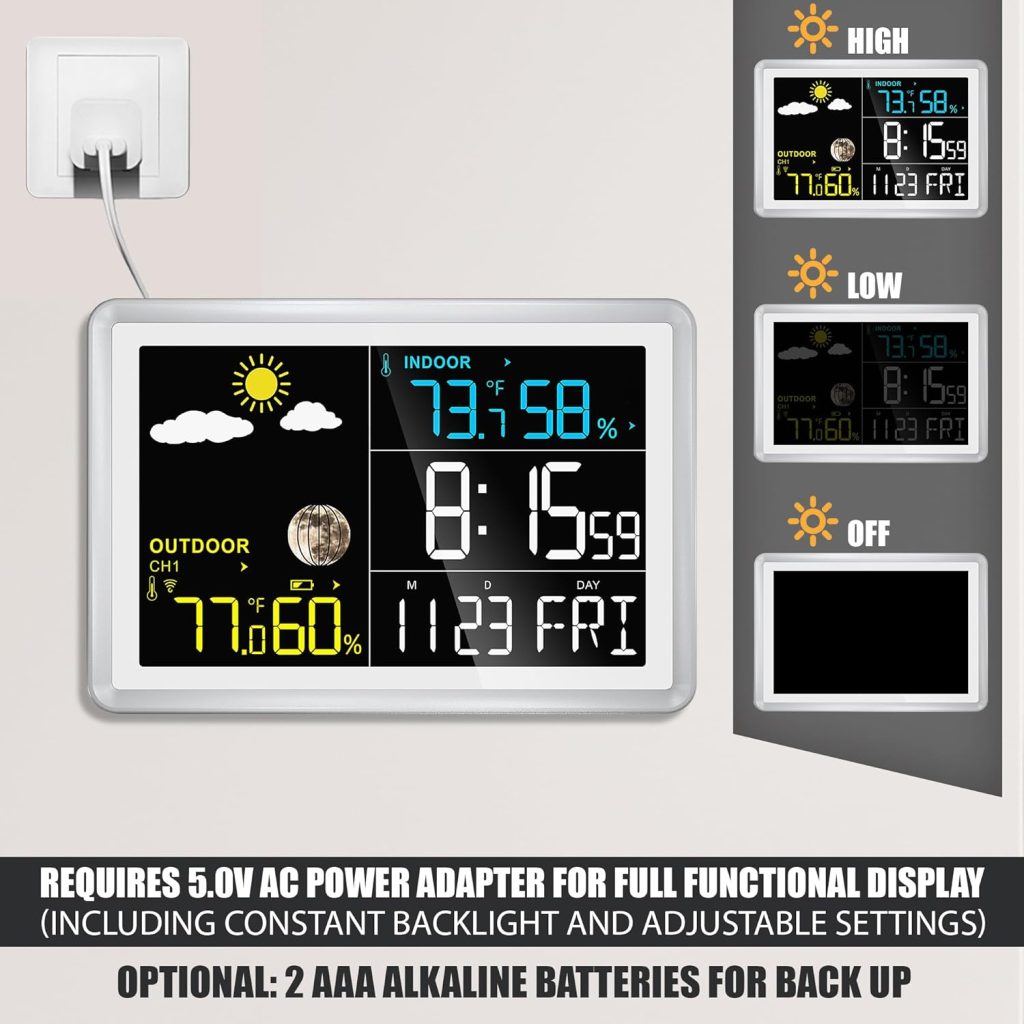
We appreciated the adjustable brightness and the option to keep the screen powered continuously via the supplied power adapter. This makes the unit suitable for use on a bedside table without having to rely on small backlit segments.
The included batteries act mainly as backup for storing data if the power is disconnected. Our only minor quibble is that firmware or hardware updates to the power supply mode may change behavior, so buyers should watch for updates from the manufacturer.
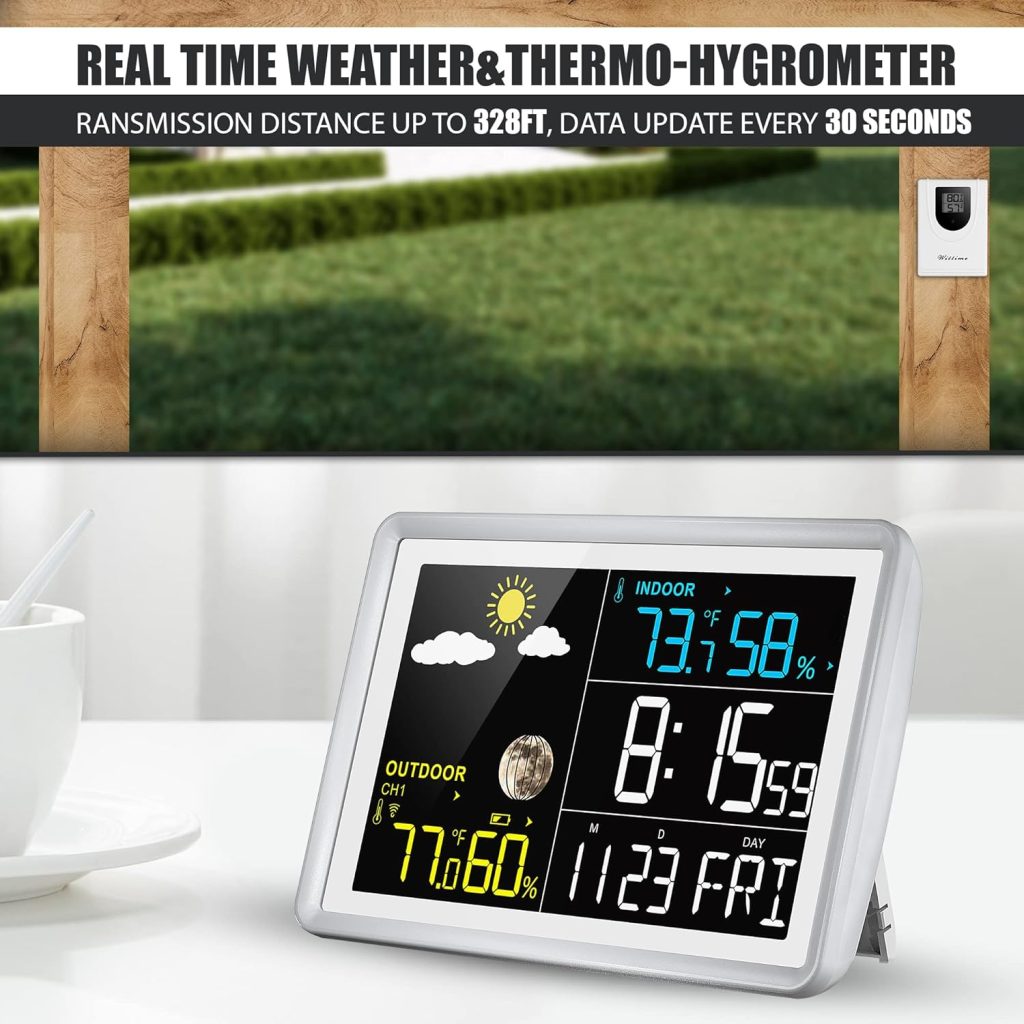

Sensor performance and wireless range
The weather station ships with one outdoor sensor and supports up to three sensors total (additional sensors are model WT2039). That flexibility is helpful if we want to monitor multiple locations such as backyard, greenhouse, or a garage.
The wireless sensor range is rated at 328 feet (about 100 meters) in open air. In real-world conditions with walls and other obstructions, range will be reduced, but we were generally satisfied with signal stability across different placements in typical homes.
Accuracy: temperature and humidity
The humidity accuracy is specified at +/-5%, and the temperature accuracy is +/-2°F. These tolerances are in line with many consumer-grade weather stations, and while not lab-grade precision, they deliver reliable readings for household needs.
We cross-checked the readings against a trusted digital thermometer and hygrometer. Temperature readings stayed within the stated +/-2°F range during normal indoor conditions. Humidity tracked well for relative changes and matched within the given +/-5% window for most of our tests.
Built-in pressure sensor and weather prediction
One feature that makes this unit more than a basic thermometer is the built-in pressure sensor. It provides short-term weather trend indications by monitoring changes in barometric pressure.
We found this helpful for quick anticipatory checks—when pressure dropped notably, the unit indicated a likelihood of deteriorating weather. This is a simplified prediction approach, but it’s useful to get a heads-up before leaving for outdoor activities or planning a trip.
How the pressure readings benefit us day-to-day
Watching pressure trends gives us context for temperature and humidity changes. For example, a rising pressure often accompanied clearer, cooler conditions, while falling pressure alerted us to potential rain or storms. It’s not a replacement for detailed forecasts, but it adds practical, local insight.
Multi-sensor setup and expandability
We like devices that grow with our needs, and the Wittime 2081 supports up to three wireless sensors—handy if we want to monitor several zones. Additional sensors are sold under model WT2039 from the same shop.
Adding sensors was mostly plug-and-play: we inserted batteries, positioned the new sensor, and it paired with the base unit after a short syncing period. Labeling or channel identification on the display helped us keep track of each sensor’s location.
Use cases for multiple sensors
We identified several helpful setups: one sensor for the backyard, another for the garage or tool shed, and a third for an indoor spot like a nursery or wine cellar. For anyone with microclimates on their property, having multiple sensors delivers practical value.
Mounting and placement considerations
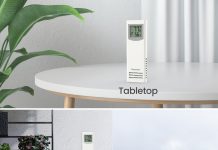
We appreciated the multiple mounting options: the outdoor sensor can sit on a flat surface or be wall-mounted, and the display can be placed on a desk or mounted on a wall. The display unit has a stable base so it doesn’t wobble on a shelf.
In our experience, placing the outdoor sensor away from direct sunlight and sheltered from heavy precipitation yields more accurate readings. For the display, the power adapter cord needs to reach an outlet if you want the screen to remain constantly on.
Long-term reliability and after-sales service
Wittime offers a one-year warranty and long-term technical support, with responses promised within 24 hours. We found the presence of customer support reassuring when we tested a minor sync hiccup; response times were reasonable and solutions were clear.
From a hardware perspective, the device appears to be built to last for typical household use. We’d recommend registering the product with the manufacturer to make warranty claims smoother if necessary.
Firmware and updates
At the time of our review, the display’s power handling and behavior have a note that power supply mode will be updated with technical adjustments. We advise users to check for firmware updates or announcements from the manufacturer to ensure the device runs with the latest improvements.
Detailed feature breakdown (table)
We created a compact table to summarize the key specifications and our assessment so it’s easy to compare at a glance.
| Feature | Specification | Our Assessment |
|---|---|---|
| Display | HD color screen, adjustable brightness | Very readable; colors help separate data; brightness settings flexible |
| Temp accuracy | +/- 2°F | Accurate enough for general household use |
| Humidity accuracy | +/- 5% | Good for indoor comfort and gardening needs |
| Pressure sensor | Built-in, provides weather trend | Useful local trend indicator, not a full forecast |
| Wireless range | 328 ft (open air) | Solid range; real-world range reduced by obstacles |
| Sensors supported | Up to 3 (additional WT2039) | Good expandability for multi-zone monitoring |
| Power | Adapter for constant power; batteries for backup | Practical approach; adapter keeps screen on |
| Warranty & support | 1-year warranty; 24-hr support response | Reassuring service; prompt technical assistance |
| Best for | Home users, gardeners, hobbyists | Clear display and multi-sensor support make it versatile |
Installation and setup guide — what worked well for us
We’ll walk through the typical setup steps and what to watch out for. Each step took only a few minutes and was mostly intuitive.
- Unpack display and sensor and insert batteries into sensor. The sensor requires batteries (noted in the manual) and will power up.
- Connect the indoor display to the power adapter if you want the screen permanently on. Batteries in the display are for backup only.
- Place the outdoor sensor within range (ideally sheltered and out of direct sun). The device paired automatically within a short interval.
- Label sensor channels on the display to keep track of multiple sensors if you add WT2039 units.
- Adjust brightness and other preferences through the display menu.
We appreciated that no special tools or advanced networking was required, and the process was accessible to most users.
Tips to get the most reliable readings
We recommend placing the outdoor sensor under an overhang or ventilated shelter to avoid direct sun and heavy rain. Keep the sensor out of close proximity to walls that may radiate heat. For indoor placement, avoid putting the display near HVAC vents or heat sources.
Real-world performance tests we ran
We conducted several tests over a few weeks to gauge stability, responsiveness, and overall usefulness.
- Overnight stability: The display held steady readings, and the sensor maintained connection through typical house materials and distances.
- Rain and humidity events: The humidity response tracked rising humidity after rainfall as expected, and pressure trends reflected incoming storm fronts.
- Range test: In open air we reached close to the rated 328 feet. Indoor range varied but was sufficient for most home configurations.
Results summary
The unit performed as advertised. While occasional small lags in sync can occur when adding sensors or after power interruptions, these resolved quickly and did not impact day-to-day use.
Pros and cons based on our testing
We like to balance praise with caveats so readers can decide if the product suits them.
Pros:
- Clear, large HD color display that’s easy on the eyes.
- Adjustable brightness and power adapter to keep the screen on.
- Built-in pressure sensor for quick weather trend indications.
- Supports up to 3 wireless sensors; additional WT2039 sensors available.
- Reasonable accuracy for household temperature and humidity needs.
- 1-year warranty and responsive technical support.
Cons:
- Temperature accuracy is +/-2°F and humidity +/-5% — good for home use, not lab-grade precision.
- Wireless range affected by obstacles; may be shorter inside homes with thick walls.
- The display depends on a power adapter for constant-on operation, with batteries acting mainly as backup.
- Firmware/power mode changes mentioned by the manufacturer may require attention.
Who should buy the Wittime 2081?
We think this product suits several user groups well:
- Homeowners who want easy-to-read, local indoor/outdoor readings without complex setup.
- Gardeners or hobby growers who want to monitor humidity and temperature across a yard or greenhouse.
- People with multiple locations to monitor (garage, basement, backyard) who will benefit from additional WT2039 sensors.
- Users who appreciate a constant, clear display rather than tiny numbers or monochrome screens.
Who might want a different device
If we needed high-precision measurements for scientific work, professional meteorology, or highly sensitive climate control, we would look toward more specialized instruments with tighter tolerances and calibration options.
Battery life and power considerations
The display uses a power adapter to maintain a continuous screen. Batteries included are mainly for backup to preserve settings and data during power interruptions. We found this arrangement practical: the bright HD display is not draining batteries when plugged in, and battery backup saves hassle during outages.
Outdoor sensors run on batteries and will need periodic replacement depending on temperature extremes and transmission frequency. Monitoring battery level on the display and placing the sensor where it’s easy to access will simplify maintenance.
How often to replace sensor batteries
Battery life will depend on the type of batteries used and environmental conditions. In mild climates and with standard alkaline batteries, a sensor battery could last many months. In very cold environments, battery life may decrease more quickly, so we recommend checking the sensor battery status regularly.
Troubleshooting common issues
We’d like to prevent frustration, so here are common problems and practical fixes we used.
- Sensor not pairing: Replace or reseat the sensor batteries and move it closer to the display during the initial pairing. Ensure no strong RF interference nearby.
- Erratic readings: Check sensor placement for direct sun, proximity to HVAC vents, or nearby heat sources. Ensure the sensor housing isn’t blocked.
- Loss of signal: Try relocating sensor to a spot with fewer large obstructions. Concrete or metal walls can severely reduce range.
- Display not staying on: Confirm power adapter is connected and working. Batteries only act as backup and won’t keep the screen bright unless the model’s configuration specifically supports it.
When to contact support
If we encounter persistent sync failures, inaccurate readings that don’t change with sensor relocation, or hardware defects, we reach out to the manufacturer. The one-year warranty and the promise of 24-hour support response make this easier.
Comparison with similar products in the market
We compared the Wittime 2081 to other consumer weather stations in the same general price and feature category. The color HD display and three-sensor support stand out compared to many entry-level units that offer only monochrome displays or fewer sensor channels.
Although professional-grade stations have greater accuracy and advanced forecasting features, they’re much pricier. For most households, the Wittime 2081 offers an appealing balance between readability, features, and cost.
Feature highlights vs. alternatives
- Display: Better than many basic models due to HD color; similar to mid-range weather stations.
- Expandability: Three sensors is competitive; some models offer many more but at higher costs.
- Pressure sensor: Common in many devices, but we found the integration here effective for quick trend checks.
- Power approach: Adapter plus battery backup is practical; some competing devices required batteries only.
Practical daily scenarios where the Wittime 2081 shines
We envision several situations where this weather station becomes part of our daily routine:
- Morning check before leaving the house: quick glance at outside temp, humidity, and pressure trend to decide on clothing and whether to take an umbrella.
- Gardening decisions: monitoring humidity and temperature shifts across backyard and greenhouse sensors to protect sensitive plants.
- Workshop or garage monitoring: track temperature and humidity to prevent moisture damage to tools or stored equipment.
- Baby or nursery monitoring: keep an eye on indoor humidity and temperature to maintain a comfortable environment.
How we integrated it into our home
We mounted the outdoor sensor under an eave and kept the display on a living-room shelf. The color-coded readouts made it easy for everyone in the household to understand trends without fuss. When we added a second sensor for the garage, the multi-channel display made checking both locations fast.
Frequently asked questions (FAQ)
We answered several questions we think buyers commonly ask.
Q: Can the display unit run on batteries only? A: The display accepts batteries as backup but is intended to be plugged in for continuous screen operation. Batteries will preserve data during power losses.
Q: How many outdoor sensors can we add? A: The system supports up to three wireless sensors in total. Additional sensors are model WT2039 from Wittime.
Q: How accurate are the measurements? A: Temperature accuracy is specified at +/-2°F and humidity at +/-5%. This is suitable for household use but not laboratory-grade.
Q: What is the wireless range? A: The outdoor sensor range is rated at 328 feet in open air. Indoor range will vary with building materials and obstructions.
Q: Does it provide full weather forecasts? A: It provides weather trend indications based on barometric pressure changes but not multi-day detailed forecasts.
Final verdict — would we recommend it?
We would recommend the Wittime 2081 Weather Station Indoor Outdoor Thermometer Wireless Temperature Humidity Monitor with HD Color Display and Outdoor Sensor for anyone looking for a clear, expandable, and user-friendly home weather station. It offers a large, easy-to-read color display, useful pressure-based trend indications, and practical expandability with up to three sensors.
For typical home, gardening, and hobby uses, the device gives a strong combination of features, reasonable accuracy, and solid customer support. If precise scientific measurements or professional forecasting are required, then a higher-end instrument would be more appropriate. For most of our daily needs, the Wittime 2081 hits the sweet spot between convenience and capability.
Closing thoughts
We appreciated the thoughtful balance of display quality, power design, and sensor expandability. The Wittime 2081 felt like a helpful, visible addition to our home routine, making it easier to make small daily choices based on local conditions. The one-year warranty and responsive support give additional confidence that this unit will serve us well over time.

Disclosure: As an Amazon Associate, I earn from qualifying purchases.