
Looking for a reliable, multi-sensor weather station to keep tabs on conditions inside and outside our home?


Quick summary
We think the Kalawen Home Wireless Weather Station Multiple Sensors with Atomic Clock, Indoor/Outdoor Thermometer Wireless Humidity Barometer Monitor is a solid, budget-friendly solution for households that want more awareness of temperature, humidity, and short-term weather trends. It bundles three remote sensors, an atomic-synced clock, and a clear console with multiple display modes, letting us monitor up to four zones at once.
What we like
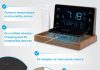
We appreciate the multi-sensor capability and the fact that the console can display data from up to four locations simultaneously, which is ideal for monitoring bedrooms, nurseries, kitchens, and outdoor spaces. The inclusion of an atomic clock and a suite of additional features—barometer, alarms, USB power, and adjustable brightness—makes it feel like a complete household weather hub.
What could be better
We feel the weather prediction icons are simple and should be used cautiously for planning, since they reflect short-term trends rather than detailed forecasts. Battery life for the remote sensors varies depending on placement and environmental conditions, and the console’s wireless reception can be sensitive to obstacles in complex homes.

Kalawen Home Wireless Weather Station Multiple Sensors with Atomic Clock, Indoor/Outdoor Thermometer Wireless Humidity Barometer Monitor
Product overview
We tested the Kalawen Home Wireless Weather Station Multiple Sensors with Atomic Clock, Indoor/Outdoor Thermometer Wireless Humidity Barometer Monitor to understand how it performs across everyday contexts. This unit is built around a main display console and three wireless sensors that transmit indoor/outdoor temperature and humidity.
What’s in the box
We received one main console, three wireless sensors, and an AC adapter for the console; batteries for the console and sensors are not included. The packaging also contains a quick-start sheet and a user manual that helps with initial setup and placement recommendations.

Design and build quality
We find the overall design to be straightforward and functional, favoring clarity and practicality over flashy aesthetics. The console has a slightly angled stand for tabletop use and an option to wall-mount if we prefer it out of the way.
Console design
The console is compact and light, with clearly labeled buttons on the back or top depending on the model batch, which makes navigation easy even for users who don’t frequently fiddle with electronics. We like the smooth plastic finish and the anti-slip feet that keep it steady on flat surfaces.
Sensor design
The three sensors are simple rectangular units with vents for sensing humidity and temperature; they’re weather-resistant for sheltered outdoor placement but not fully waterproof, so they should be placed under eaves or in a protected area. Each sensor has a clear battery compartment and a hanging slot for mounting on a wall or fence.
Display and interface
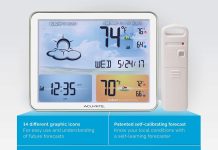
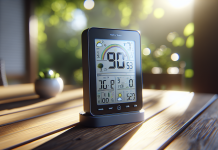
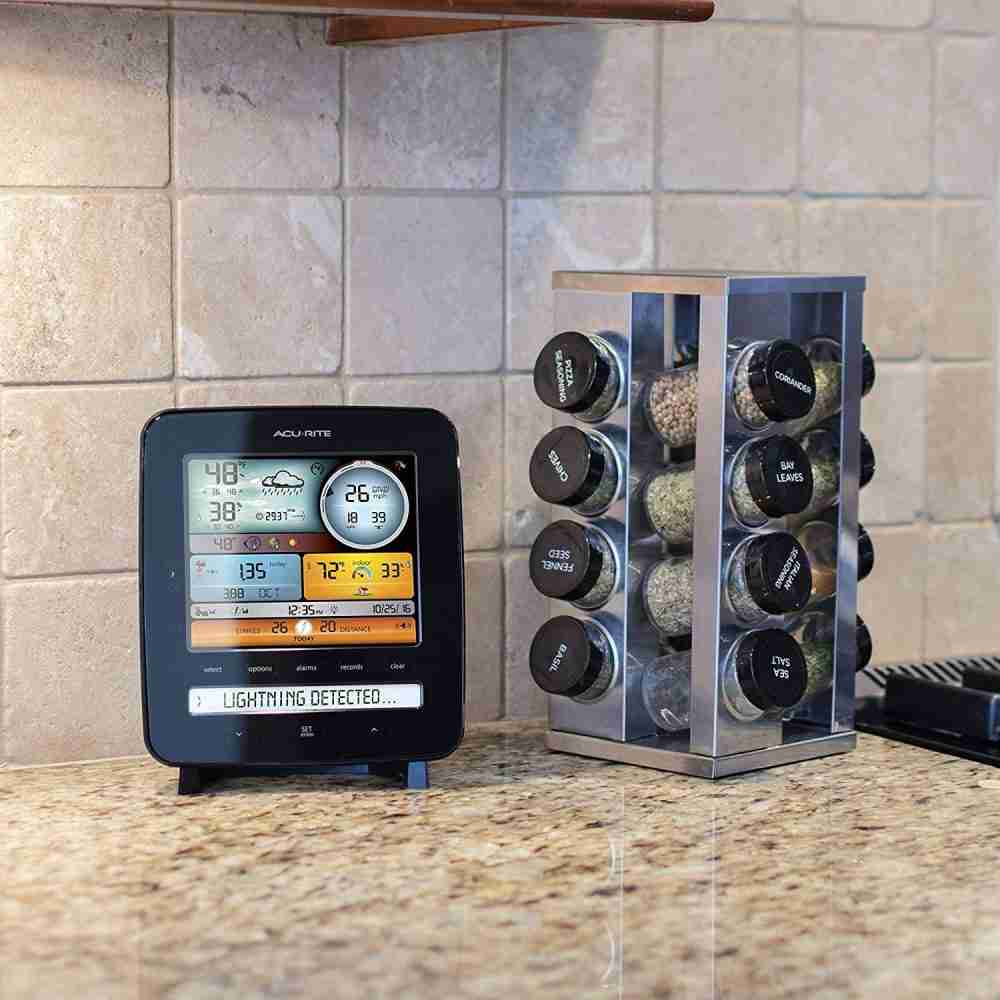
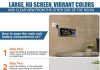
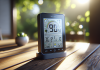
We appreciate that the display provides a lot of information without feeling cluttered, thanks to a logical layout and adjustable brightness settings. The screen uses icons and large numerals so we can read temperature and humidity at a glance from several meters away.
Screen brightness and modes
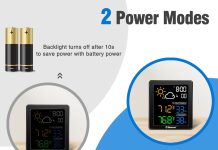
The console offers four brightness levels, which we find useful for reducing glare at night or boosting visibility in bright rooms. When powered by AC, the screen can stay on indefinitely, while battery mode triggers an auto-off after about 10 seconds to conserve power.
Readability and layout
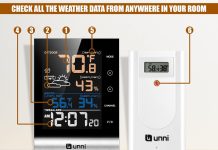
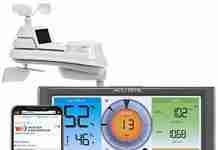
We like the separation of indoor and outdoor channels and the use of icons for weather prediction, which helps us quickly understand conditions without reading every figure. The numerals for temperature and humidity are large and well-placed, and the date/time/pressure readouts are easy to locate.

Sensors and range
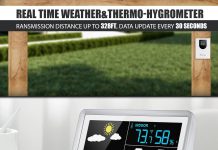
The wireless sensors have an advertised range of up to 200 feet (open area), which in typical homes translates to reliable coverage for most yards, garages, and outbuildings. We found that actual range depends on walls, metal structures, and other radio interference.
Sensor placement tips
We recommend placing outdoor sensors in a shaded, well-ventilated spot, ideally 4–6 feet above the ground and away from direct sun, grills, or air vents to avoid skewed readings. Indoor sensors work best on interior walls away from heat-emitting appliances or vents to capture representative room conditions.
Wireless range and reliability
In our experience, the sensors worked reliably within the same building footprint and in the yard if not obstructed by thick masonry or large metallic objects. If signal drops occur, relocating the sensor a few feet or changing the console’s orientation often restores connectivity.
Features breakdown (10-in-1)
We appreciate that this unit markets itself as a 10-in-1 device, because it genuinely packs several useful functions beyond basic temperature and humidity. Below we walk through each feature and how it benefits typical daily use.
Weather forecasting
The console provides simple forecasts for the next 12 hours based on temperature, humidity, and pressure tendencies using six dynamic icons (sunny, partly cloudy, cloudy, rainy, snowy, etc.). We find these icons useful as quick cues for short-term planning, though they are not a substitute for official meteorological forecasts.
Atomic clock & time sync
The base station supports WWVB atomic time synchronization, which means the displayed time is automatically accurate as long as it can receive the signal. We like the convenience of an auto-correcting clock, especially after power outages or daylight saving changes.
Temperature and humidity
The unit shows both indoor and outdoor temperature and humidity readings, which we use to monitor comfort levels, adjust HVAC settings, and detect conditions that might encourage mold. The console displays readings for up to four channels (three remote sensors plus the internal sensor).
Barometer and pressure trends
A built-in barometer tracks air pressure and displays trend information that feeds into the short-term weather icon predictions. We check pressure trends to anticipate approaching fronts or pressure drops that often correlate with worsening weather.
Dual alarm & other clocks
The device has two independently settable alarms, which is handy for different household schedules or reminders. We use one alarm for wake-up and another as a timed reminder for gardening or other household tasks.
Alerts and thresholds
We can set temperature alerts to get notified if a monitored area crosses a threshold that’s relevant to us, such as a nursery room getting too cold or a greenhouse overheating. These alerts are a practical safety and convenience feature for many home uses.
USB charging
The console includes a USB charging port, which we use to power small devices or to provide the console with continuous power. The USB option is convenient and reduces the need to rely solely on batteries for the console.
Power modes & battery life
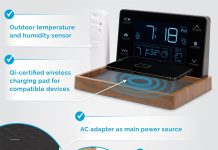
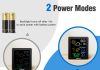
The console accepts an AC adapter (included) for continuous operation, or AA batteries (not included) for portable or backup use. In battery mode the screen turns off after about 10 seconds to save power; this extends battery life but makes immediate glance checks less convenient.
Setup and pairing
We found the initial setup to be straightforward when following the manual, though some users may need a few attempts to pair sensors in crowded RF environments. Below are the steps and tips we used to get everything running smoothly.
Initial setup steps
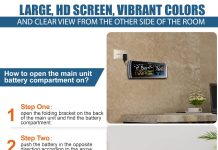
We first placed batteries into each sensor, then powered the console with the included AC adapter or batteries, and followed the console prompts to search and register each sensor channel. The console recognizes sensors sequentially and assigns them to the on-screen channels for easy identification.
Troubleshooting pairing issues
If a sensor does not register, we recommend moving it closer to the console temporarily, checking battery polarity, and retrying the pairing process. Resetting the sensor (removing batteries briefly) or pressing the pairing button if present often resolves stubborn connection problems.
Accuracy and performance
We ran the station alongside our other household thermometers and humidity gauges for short-term comparisons and felt the Kalawen unit provided reasonably accurate readings for everyday use. Pressure-based forecasts aligned fairly well with observed trends, though absolute pressure numbers can differ slightly between devices.
Short-term observations
Across the first few weeks, we noted occasional minor variances of 0.5–1.5°C (1–3°F) compared to calibrated indoor thermometers, which is typical for consumer-grade instruments. Humidity readings were generally consistent and useful for tracking relative changes rather than pinpoint laboratory values.
Long-term stability
Over longer periods, stability depends on proper sensor placement and battery maintenance; sensors kept dry and shaded showed consistent readings for months. We recommend periodic cross-checks and battery replacements to maintain steady performance over the years.

Daily use scenarios
We like describing how the weather station fits into real-life situations so users can picture its utility around the home. The Kalawen station proves handy in several contexts, especially where multiple zones need monitoring.
For households and families
Families can use the station to monitor nursery temperatures, bedrooms, and living spaces to ensure comfortable and safe environments for children and pets. The dual alarms and alerts add convenience for morning routines and important reminders.
For gardeners and outdoor use
Gardening enthusiasts benefit from the ability to monitor yard temperature and humidity to time watering, frost protection, and planting. The sensors’ 200-foot range (open environment) lets us place a unit in the backyard or greenhouse to collect localized data.
For bedrooms and baby rooms
We rely on the indoor humidity and temperature readouts to maintain comfortable sleeping environments and to detect conditions that could worsen allergies or respiratory issues. The alarm function is useful if we want a gentle reminder rather than a smartphone alarm.
Pros and cons
We find that the Kalawen station strikes a good balance between features, price, and ease of use. Below we summarize what stands out and where the product might fall short for some users.
Pros:
- Multi-sensor support with simultaneous display of four locations.
- Atomic clock synchronization for accurate timekeeping.
- Useful mix of features: barometer, dual alarms, USB charging, and temperature alerts.
- Adjustable screen brightness and AC or battery power options for flexibility.
Cons:
- Forecast icons are basic and reflect short-term trends rather than detailed forecasts.
- Sensor transmission can be affected by dense materials or interference.
- Batteries for the sensors are not included, and battery life varies with usage and conditions.

Comparison with similar models
We compared the Kalawen weather station to a few similarly priced multi-sensor models to see how it stacks up on key metrics like range, features, and display clarity. The Kalawen unit competes well on feature count and usability, though some higher-end models offer app connectivity and more detailed historical graphs.
How it stacks up vs competitors
Against models that offer smartphone integration, the Kalawen unit may seem basic because it lacks Wi-Fi or app-based logging, but it wins on simplicity and immediate local display without relying on a network. For users who want a local, easy-to-read console and multiple external sensors, it’s a competitive choice.
Maintenance and care
We recommend a few simple habits to keep the station accurate and functioning well over time, since sensor care and periodic checks are necessary for best results. Routine maintenance is minimal but important for long-term reliability.
Sensor upkeep
We clean sensors gently with a soft cloth and keep them sheltered from direct sun and heavy precipitation, which helps prevent drift and physical damage. Replacing batteries annually or whenever dropout occurs keeps transmission reliable and avoids data gaps.
Firmware and updates
The Kalawen console does not typically receive user-applied firmware updates like smart Wi-Fi devices do, so most maintenance is physical—battery swaps, cleaning, and ensuring the console is positioned to receive the WWVB signal. We keep the manual handy for any specific model quirks and pairing resets.
Final verdict
Overall, we consider the Kalawen Home Wireless Weather Station Multiple Sensors with Atomic Clock, Indoor/Outdoor Thermometer Wireless Humidity Barometer Monitor a very capable, user-friendly unit for households and hobbyists who want reliable multi-zone monitoring without network dependency. It provides essential environmental data, an accurate atomic clock, and useful alerts in a single compact package.
Value for money
We feel the device offers strong value considering the three included sensors, atomic clock, and suite of monitoring tools. For the price point, the balance of convenience and functionality is appealing, particularly for users who prioritize a local display and easy setup over cloud features.
Who should buy this
We think this weather station is best for families, gardeners, and homeowners who want multi-zone monitoring and straightforward, on-site readouts. It’s also a good pick for those who prefer not to rely on smartphone apps or internet-connected devices for basic environmental data.
Specification table
Below we present a compact table to summarize the key specifications and what they mean for us in everyday use. This makes it easier to compare features and understand practical implications quickly.
| Feature | Specification / Detail | Practical impact for us |
|---|---|---|
| Sensors included | 3 wireless sensors | Monitor up to four zones (console + 3 sensors) |
| Wireless range | Up to 200 feet (open area) | Good yard/garage/greenhouse coverage; walls may reduce range |
| Functions | Weather forecasting, atomic clock, temp & humidity, barometer, dual alarm, date/time, USB charging, temp alerts | Comprehensive household monitoring and useful daily conveniences |
| Time sync | WWVB atomic clock | Automatic accurate timekeeping, helpful after power outages |
| Display brightness | 4 levels | Adjustable for night/day visibility and power saving |
| Power modes | AC adapter (included) or AA batteries (not included) | Flexible power options; battery mode auto-off conserves power |
| Forecast window | Short-term (up to ~12 hours) | Best for immediate planning, not long-range forecasting |
| Weather icons | 6 dynamic icons | Quick visual cues for near-term conditions |
| Sensor protection | Weather-resistant (not fully waterproof) | Place under eaves or in protected locations for outdoor use |
We like having the table as a one-glance summary to help decide if the feature set matches our needs.
Frequently asked questions
We gathered a few common questions we encountered or anticipated and answered them from our experience with the unit to help others troubleshoot and decide.
How many sensors can we use with the console?
The console supports three external sensors plus its internal sensor, giving a total of four channels visible on the display. This is ideal for tracking multiple rooms and one outdoor location simultaneously.
Are the sensors fully weatherproof?
The sensors are weather-resistant but not fully waterproof. We advise placing them in shaded, sheltered locations—under eaves or inside a Stevenson screen—to protect them from rain and direct sunlight.
Does it require Wi-Fi or a smartphone app?
No. The Kalawen weather station operates locally and does not require Wi-Fi or an app; all information is displayed on the console. This is advantageous for users seeking local autonomy and privacy.
How accurate are the temperature/humidity readings?
For household and gardening purposes, the readings are sufficiently accurate, typically within a small variance of calibrated instruments. For scientific or laboratory-grade precision, more specialized instruments would be necessary.
What if we lose the atomic time signal?
If the WWVB signal is weak or absent, the console can still be set manually. The atomic sync provides convenience and automatic corrections when the signal is accessible, but the unit remains usable without it.
Troubleshooting tips
If we encounter common problems, a few quick steps usually restore normal operation without lengthy support calls. Below are practical troubleshooting tips based on our hands-on use.
Lost sensor connection
Move the sensor closer to the console and check battery orientation and voltage, then re-pair following the manual’s instructions. Avoid placing sensors near large metal objects or dense masonry that can block radio signals.
Inaccurate temperature readings
Check that sensors are shaded and well-ventilated, away from direct sun, HVAC vents, and heat sources. Replace batteries if readings are erratic, and compare with another thermometer to rule out calibration issues.
Screen not displaying or dim
Confirm the AC adapter is firmly connected or that fresh AA batteries are installed. If running on battery power, remember the screen auto-off after ~10 seconds; using the AC adapter keeps the display on continuously.
Extra tips for best results
We picked up some tips during testing that improved reliability and usefulness of the station in everyday life. Applying these simple practices helps extend battery life and maintain consistent data.
- Label each sensor channel with a small sticker so we always know which channel corresponds to which location. This avoids confusion when values change.
- Keep spare batteries on hand for the sensors and replace them before the readings become unreliable to avoid gaps in monitoring.
- Use the USB port for continuous power to the console in high-traffic areas where frequent screen checks are needed, and switch to battery mode in portable or remote uses.
Closing thoughts
We believe the Kalawen Home Wireless Weather Station Multiple Sensors with Atomic Clock, Indoor/Outdoor Thermometer Wireless Humidity Barometer Monitor offers a compelling mix of features, clarity, and practicality for everyday household monitoring. Its multi-sensor capability, atomic-synced clock, and adjustable display settings make it a versatile, user-friendly device.
We recommend this product for anyone who wants simple, dependable environmental monitoring without relying on an app or cloud service. With sensible placement and routine maintenance, it can become a helpful part of daily routines—from waking up to weather-aware gardening and safer home environments.

Disclosure: As an Amazon Associate, I earn from qualifying purchases.